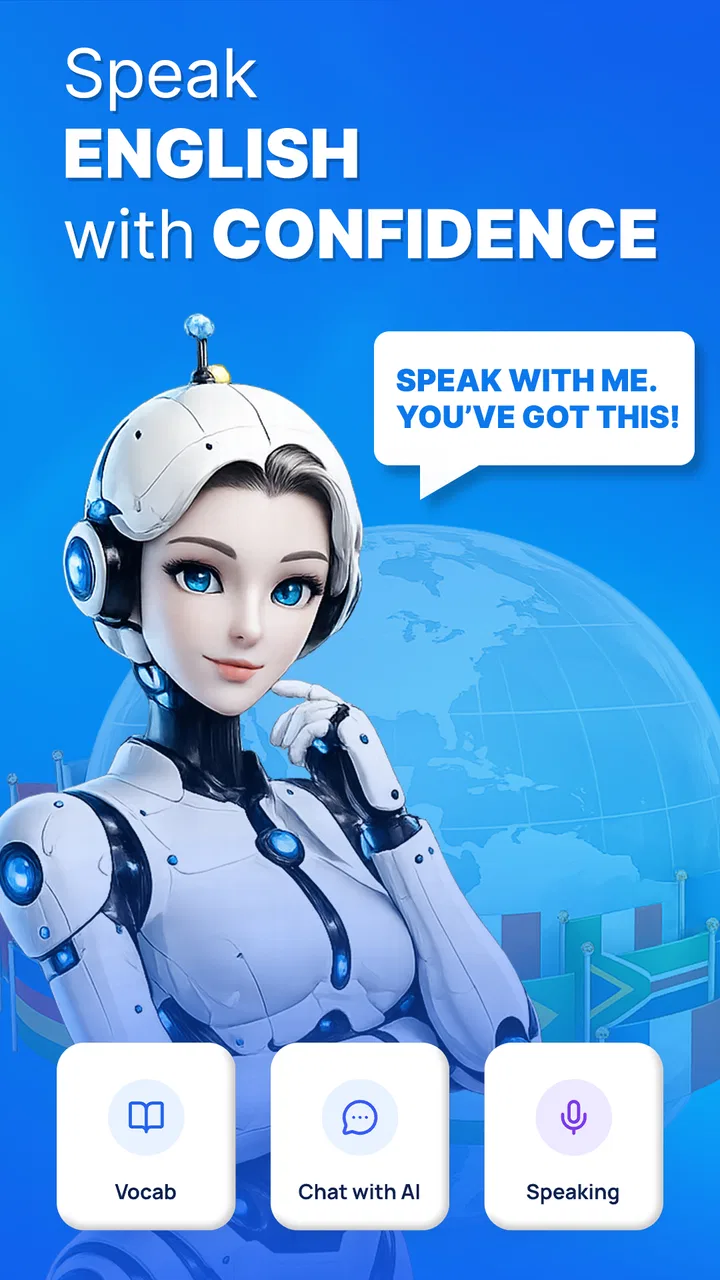
Fluza: AI Language Tutor
- 4.9
- Rating
- 1.00M
- Installs
- Free
- Price

 Analysis by App-foxy
Learning a language with an AI tutor sounds simple: open the app, choose what you want to study, and start speaking or practicing. In my experience with Fluza: AI Language Tutor, the real test is less about the first lesson and more about whether the app fits naturally into the small gaps in your day. It is an education app from Vit Corp. that puts instant AI feedback at the center of language practice, and that makes it feel more interactive than a basic vocabulary list.
I found the strongest use case to be short, repeatable practice sessions. Fluza is easier to keep using when I treat it as a daily speaking companion rather than a complete replacement for a course, teacher, or textbook. That distinction matters. The app can help turn passive knowledge into active practice, but progress still depends on choosing sensible goals and returning often.
It is free to install and available to Everyone, with optional in-app purchases ranging from $3.49 to $69.99 per item. The app has reached over one million installs and holds a 4.8 average from around 3,100 ratings, which suggests that many users find its basic approach appealing. I would still look beyond the rating, because an AI language tool can be excellent for one learner and frustrating for another depending on the desired language, study style, and tolerance for conversational correction.
You May Also Like

 Blood Strike: 2.5 Anniversary
Blood Strike’s Loadouts Turn Every Drop Into a Tactical Gamble
A close look at Blood Strike’s custom loadouts: how fast access to signature weapons reshapes its battle royale rhythm, rewards preparation, and narrows the gap between fights.

 Pandora - Music & Podcasts
Pandora’s Music Is Easy to Start, but Harder to Recover
Pandora’s strength is its low-effort path from a seed to a station. Its weak spot is how much confidence it asks you to place in connection, setup, and quiet recovery.

 8 Ball Pool
 Is Built on Rivalries, Rematches, and Routine
A close look at the rivalries, rematches, shared routines, and unanswered safety questions that turn a quick pool match into a persistent mobile community.

 Samsung Music
’s Quiet Strength Is Playing What You Already Own
Its reach comes less from spectacle than from dependable access to a personal library. That simplicity is both the app’s strongest retention engine and its ceiling.

 AccuWeather: Weather Radar
AccuWeather Review: A Quick, Clear Forecast for Everyday Decisions
For everyday plans, the best forecast is the one you can understand quickly. AccuWeather makes rain timing, radar, and local conditions easy to act on, with a few trade-offs.

 Hill Climb Racing
Why Hill Climb Racing Still Turns Crashes Into One More Run
A tiny car, a bumpy hill and one more upgrade: Hill Climb Racing keeps resurfacing because its simple chaos makes every near-miss feel personal.
More From Our News Desk



Getting past the first points of friction
The first place many people get stuck is expecting an AI coach to behave exactly like a traditional lesson app. A conventional course usually presents a fixed sequence: vocabulary, grammar, exercises, and a clear next step. Fluza’s appeal is its more flexible practice style, but flexibility also means the learner has to provide some direction. If I open it without a goal, I can spend time trying prompts or activities without building a coherent routine.
I get better results by deciding what I want before starting a session. That might be practicing introductions, preparing for a trip, reviewing a difficult tense, or becoming more comfortable answering simple questions aloud. A narrow objective gives the feedback a purpose. Without one, instant corrections can become a stream of isolated suggestions that I understand in the moment but do not remember later.
Another common stumbling block is confusing correction with mastery. When the AI points out a mistake immediately, the sentence may look clear enough to me, yet I may repeat the same error a few minutes later. My practical workaround is to stop after an important correction and say the improved sentence again in a new context. That extra repetition is more useful than rapidly moving on because it turns feedback into an active response.
The app is also not a magic solution for every language problem. It can encourage practice and give me a low-pressure place to try sentences, but it does not remove the need to listen to real speakers, read naturally written material, or learn how people actually use expressions in context. I see Fluza as the bridge between studying a rule and attempting to use it, not as the entire bridge from beginner to fluent speaker.
What to check before blaming the app
When a language-learning session feels awkward, I first check the basics of my own setup. I make sure I have selected the language and practice direction I actually intend to use, then I read the task carefully instead of answering from habit. A surprising number of “wrong” corrections come from responding to a different question than the one presented or from mixing the language being learned with the language used for explanation.
I also start with a short, simple exchange. Testing the app with a basic introduction or a familiar daily topic is more useful than immediately attempting a complicated paragraph. If the first exercise is already too demanding, I cannot tell whether the problem is my level, my wording, or the activity itself. A small test gives me a clean baseline and makes later feedback easier to interpret.
Because Fluza depends on AI interaction, I pay attention to how I phrase my request. Vague instructions such as “teach me everything” are not very helpful for any tutor. A more practical direction is “practice a restaurant conversation with short replies” or “correct my sentence and explain the main mistake simply.” I do not need elaborate prompts; I just need to define the task, difficulty, and type of help I want.
Device compatibility is straightforward for many users because the app requires Android 8.0 or later. Before troubleshooting anything complicated, I check that the phone meets that requirement and that the app is updated to version 1.4.0. I also close and reopen the app if a session behaves strangely. These are ordinary steps, but they prevent me from treating a temporary loading or response problem as a language-learning limitation.
For anyone considering payment, I would begin with the free experience and decide whether the practice style genuinely fits. The presence of optional purchases does not automatically make the app unsuitable, but it does make it important to understand my own usage before paying. Someone who only wants occasional help may be satisfied without spending, while a frequent learner should consider whether the paid options match the amount of practice they realistically expect to complete.
A workflow that makes feedback stick
My most useful Fluza routine has three stages. I begin with a warm-up using sentences I already know, move into a focused conversation, and finish by revisiting the corrections that mattered most. The warm-up reduces the fear of making mistakes, while the focused middle section gives the AI coach enough context to identify patterns rather than treating every sentence as unrelated.
I avoid trying to fix every error at once. If I am practicing a conversation about travel, I might concentrate on verb forms and leave pronunciation or word choice for another session. This is a trade-off: correcting less can feel slower, but it keeps the lesson manageable. When I try to absorb five different types of feedback simultaneously, I remember very little.
A particularly useful habit is keeping a small personal list outside the app. After a session, I write down a few corrected sentences and one question I still cannot answer confidently. On the next visit, I use those sentences as a starting point. This creates continuity even when the individual interactions feel conversational and open-ended. It also stops the app from becoming a sequence of disposable chats.
For speaking practice, I treat hesitation as information rather than failure. If I know the grammar but cannot produce a sentence quickly, I repeat the same idea with simpler words, then attempt it again with the original wording. That workflow helps separate a knowledge gap from a retrieval problem. Fluza is especially useful here because the AI format makes it easier to attempt another answer immediately instead of waiting for a scheduled lesson.
For writing, I ask myself to produce the first version without overthinking. Then I compare the correction with what I intended to say. The important question is not only “What was wrong?” but also “What would a more natural sentence allow me to express?” Sometimes the corrected version reveals a vocabulary gap; other times it shows that I translated directly from my first language. Those require different follow-up practice, and recognizing the difference saves time.
One trade-off is that instant feedback can interrupt fluency. If I stop after every sentence, I may become overly cautious and lose the rhythm of conversation. I therefore alternate between correction-heavy practice and uninterrupted attempts. During the first mode I want precise guidance; during the second I care more about communicating an idea from beginning to end. A good tutor should support both habits, but I have to choose the mode deliberately.
When the problem is really the learning plan
Not every disappointing result comes from the application. If I use it irregularly, jump between unrelated topics, and never review corrections, the experience can feel unproductive even when the feedback is accurate. Language learning rewards accumulation. Fluza can make practice more accessible, but it cannot create consistency on my behalf.
It is also possible to ask an AI tutor for something it is not well suited to provide. If I need a formal curriculum with carefully graded units, exam preparation, or a teacher who understands my personal history, a structured course or human instructor may be the better choice. Fluza’s conversational flexibility is valuable, but that same flexibility may feel less reassuring to someone who wants every lesson mapped out in advance.
Likewise, learners who mainly need listening comprehension from different accents should not rely on one app alone. AI feedback can make practice less intimidating, yet real conversations contain interruptions, background noise, slang, and varied speaking styles. I would pair Fluza with authentic audio and occasional interaction with real people if listening in the wild is the main goal.
Beginners may need to simplify their expectations. An AI coach can help them form basic sentences and become comfortable experimenting, but a complete beginner can still feel lost if the task assumes knowledge they do not have. I would start with very short responses, ask for plain explanations, and repeat core patterns before attempting open-ended conversation. If that still feels too unstructured, a beginner course with visual progression may be a better first step.
Advanced learners face the opposite issue. They may appreciate immediate correction but find that everyday practice does not challenge specialized vocabulary, subtle register, or professional writing unless they bring those topics into the session themselves. For them, Fluza works best as a rehearsal space: preparing a presentation, refining an explanation, or testing how clearly an idea can be expressed before using it with colleagues.
Everyday situations where it earns its place
Imagine that I have ten minutes before leaving for work and want to prepare for a conversation with a hotel receptionist. I can use that short window to rehearse checking in, asking about breakfast, and explaining a problem with a room. I would not try to complete a full course lesson. Instead, I would repeat the phrases that feel unnatural, ask for simpler alternatives, and finish by answering without looking at notes. That is a realistic role for the app: turning a specific worry into a manageable rehearsal.
Another useful scenario is the learner who understands written language but avoids speaking. Fluza gives that person a private place to make imperfect attempts. The privacy matters because embarrassment often prevents practice more than lack of knowledge does. I can test a sentence, receive feedback, and try again without making a social mistake in front of a conversation partner.
Parents and teachers could also use the app as a supplementary practice tool, although I would not hand over the entire learning plan to it. A student might use it to rehearse vocabulary from class or turn a grammar topic into short exchanges. The adult still needs to choose appropriate tasks and check whether the explanations make sense for the learner’s level.
Travelers can benefit from targeted preparation, while busy adults may value the ability to practice without arranging a lesson. The strongest advantage is convenience combined with interaction. A flashcard app is often better for memorizing a fixed set of words, and a textbook is often better for seeing a carefully ordered explanation. Fluza becomes more compelling when I need to use those words in a sentence and want immediate guidance.
How it compares with familiar alternatives
Compared with flashcards, Fluza is less efficient for rapid vocabulary review but more useful for production. Flashcards show whether I recognize a word; an AI conversation asks me to retrieve and place it into an idea. I would choose flashcards when I have a large list to memorize and Fluza when I need to turn that list into usable language.
Compared with grammar books, the app offers quicker experimentation and less formal reading. A book can explain exceptions in a stable, carefully edited way, while Fluza lets me test a sentence immediately. The trade-off is that learners who enjoy detailed rules may still want a reference source beside it. I would use the book to understand a difficult concept and the app to practice applying it.
Compared with a human tutor, Fluza is easier to access for spontaneous practice and likely less intimidating when I am nervous. A person, however, can notice emotional hesitation, adapt a lesson over time, and explain cultural nuance in a way that feels deeply personal. I would not frame the choice as either-or. For many learners, the app can fill the gaps between human lessons, especially when a weekly meeting is not enough practice.
Compared with a fixed lesson platform, the AI approach gives me more control over topics and wording. That is a strength when I have an immediate need, but it can become a weakness when I lack discipline. The best alternative depends on the problem I am trying to solve: structure, memorization, conversation confidence, pronunciation, or accountability. Fluza is strongest in the space between guided study and free conversation.
What the current release means for prospective users
Fluza is currently at version 1.4.0, and I would keep that version current when evaluating the experience. Updates can matter especially in an AI-driven app because small changes to interaction flow or response handling can affect how comfortable practice feels. If a session suddenly behaves differently, I would first check that the installed version matches the current release before rebuilding my entire study routine.
The app’s Everyone age rating makes it approachable for a broad audience, but that should not be mistaken for a guarantee that every activity will suit every learner. Younger users still benefit from an adult setting goals and checking that the material is appropriate for their needs. Older learners may appreciate the simple access to practice, while students preparing for a specific assessment should combine it with the exam’s official requirements.
Vit Corp. has positioned this product around an AI coach rather than a static reference tool, so the quality of the experience depends heavily on interaction. I get the most from it when I actively respond, request clarification, and revisit mistakes. Passive use—reading a correction once and moving on—makes the app feel less valuable than it could be.
My practical verdict
I recommend Fluza to learners who want frequent, low-pressure language practice and who are willing to guide the session. It is particularly appealing if speaking confidence is the obstacle, if a human tutor is not always available, or if standard exercises feel too disconnected from real communication. The free entry point makes it reasonable to test the workflow before considering any optional purchase.
I would skip it as a primary tool if I need a fully sequenced course, intensive exam coaching, or detailed human explanation at every stage. I would also avoid judging it after one unfocused session. The app becomes more useful when I arrive with a specific situation, limit the number of corrections I tackle, and return to the same mistakes later.
My final view is that Fluza works best as a practical rehearsal partner. It does not replace books, real conversations, listening practice, or a teacher when those are needed. What it does well is lower the barrier to trying language actively, then give me feedback while the sentence is still fresh. Use it for deliberate, repeatable practice rather than passive browsing, and its AI-coach format has a genuine place in an everyday language-learning routine.
FAQs for Fluza: AI Language Tutor
01What is Fluza: AI Language Tutor, and how does it work?
Fluza: AI Language Tutor is a language-learning app that uses artificial intelligence to provide interactive practice. Instead of relying only on static lessons, it can help users work on vocabulary, grammar, pronunciation, and conversational skills through personalized activities. The experience is designed to feel more like practicing with a digital tutor, although the quality and usefulness of feedback may depend on the language, exercise, and the user’s device settings.
02Which languages can I learn with Fluza?
The languages available in Fluza may vary depending on the current app version, region, and supported learning features. Before downloading, check the official store listing or the language-selection screen to confirm that your target language is included. It is also worth checking whether conversation practice, pronunciation evaluation, and complete lesson paths are available for that language, since some languages may receive broader AI support than others.
03Is Fluza suitable for complete beginners?
Fluza can be useful for beginners because AI-based practice allows users to start with basic vocabulary, common phrases, and simple conversations at their own pace. However, it should not be treated as a complete replacement for a structured course, teacher, or formal study plan. New learners will usually get better results by practicing regularly, reviewing mistakes, and using the app alongside listening, reading, and real-world language exposure.
04Does Fluza: AI Language Tutor require a subscription or include in-app purchases?
The app may offer free access to selected lessons or features while reserving extended practice, advanced AI tools, or additional content for a paid plan. Pricing, trial availability, billing periods, and included features can change, so review the current Google Play or App Store details before subscribing. If a free trial is offered, check its renewal terms carefully and cancel it through your store account if you do not want automatic billing.
05Does Fluza need an internet connection, and how does it handle privacy?
Because AI tutoring generally requires communication with online services, an internet connection may be needed for conversations, personalized feedback, or speech-related features. Offline availability can differ by feature and app version. Since language practice may involve typed or spoken input, read Fluza’s privacy policy and the permissions shown during installation to understand what information may be collected, how it is processed, and whether recordings or account data are retained.
Pros
- Personalized AI practice adapts to your learning pace and level.
- Useful for practicing conversations without pressure or embarrassment.
- Instant corrections can help improve grammar and word choice.
- Available anytime
- making short daily study sessions convenient.
- Supports independent learning outside traditional classes.
Cons
- AI feedback may occasionally misunderstand context or intended meaning.
- Advanced features may require a paid subscription.
- It cannot fully replace speaking with native human tutors.
- Progress may feel limited without a consistent study routine.
- Some learners may prefer more structured lessons and clear goals.

Fluza: AI Language Tutor
Gallery